
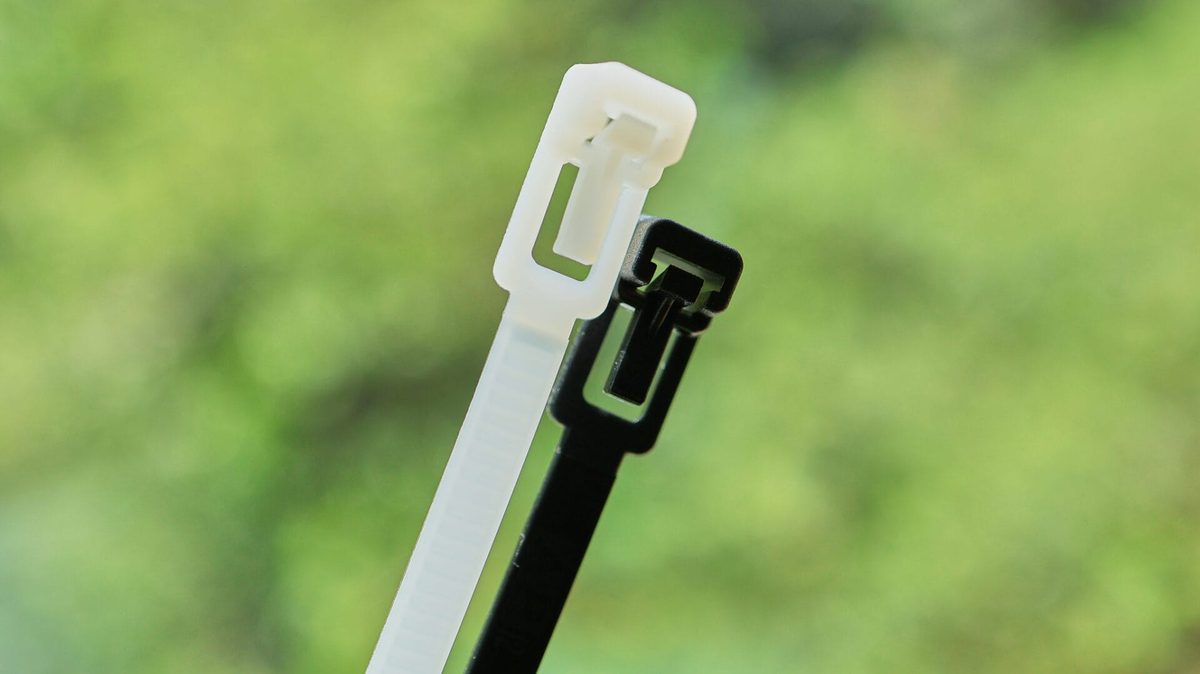
Unlike conventional plastic cable ties, eco-friendly cable ties are designed to use renewable resources, improve biodegradability and cut carbon emissions, and they are evolving to minimise environmental impact.
In this article we take an in-depth look at the materials, advantages, applications, limitations, certification standards and market outlook of eco-friendly cable ties, to provide useful information for businesses and consumers alike.
1. Eco-friendly cable tie materials
Eco-friendly cable ties can be broadly divided into bioplastics, recycled plastic, wood plastic composites and paper-based materials.
Main eco-friendly materials
| Material type | Description | Key features |
|---|---|---|
| Bioplastics | Plastics derived from plant-based raw materials (corn, sugar cane, potatoes, etc.) | Less fossil fuel use, biodegradable |
| PLA | Biodegradable plastic derived from corn starch | Breaks down under specific conditions; industrially compostable |
| PHA | Produced by microorganisms and breaks down naturally | Highly biodegradable, even in marine environments |
| Recycled plastic | Produced by recycling existing plastic waste | Less virgin plastic, lower CO₂ emissions |
| Wood plastic composite | A blend of wood powder and bioplastic | Combines durability and environmental friendliness |
| Paper-based materials | Made from fully biodegradable paper | Less plastic use, easy disposal |
2. Key advantages of eco-friendly cable ties
Cable ties made from eco-friendly materials offer a number of environmental and functional advantages over conventional plastic products.
Biodegradability
Some eco-friendly materials (PLA, PHA) break down naturally through microorganisms, helping to tackle the problem of plastic waste. PLA: breaks down in industrial composting facilities · PHA: biodegradable even in marine environments
Lower carbon footprint
Bioplastics emit less CO₂ during manufacture than fossil-fuel-based plastics · Using recycled plastic reduces the production of new plastic, cutting carbon emissions
Recyclability
Can be made from existing plastic waste · Some products are easy to reuse and recycle, reducing the environmental burden at disposal
Regulatory compliance
Meeting environmental regulations such as the EU RoHS (Restriction of Hazardous Substances) directive and REACH (Registration, Evaluation, Authorisation and Restriction of Chemicals) has a positive effect on international trade and on companies' ESG (Environment, Social, Governance) management
3. Main applications of eco-friendly cable ties
Eco-friendly cable ties can be used in many industries and can replace conventional plastic cable ties.
| Industry | Application | Expected benefit |
|---|---|---|
| Electrical and electronics | Eco-friendly cable ties that meet RoHS and REACH requirements | Regulatory compliance, greater sustainability |
| Packaging | Packaging using biodegradable cable ties | A stronger eco-friendly brand image |
| Agriculture and horticulture | Biodegradable cable ties for fixing plant supports | Break down naturally after use, preventing soil contamination |
| Construction and interiors | Cable ties made from recycled plastic | Less single-use plastic on construction sites |
4. Limitations of eco-friendly cable ties
There are several technical and economic limits to commercialising eco-friendly materials.
| Limitation | Details |
|---|---|
| Higher cost | Eco-friendly materials cost more to manufacture than conventional plastics, which can push up product prices |
| Durability | Some biodegradable materials can be weaker and less durable than conventional plastics |
| Limited degradation conditions | Bioplastics such as PLA only break down under specific conditions (oxygen, humidity, temperature), so they are hard to degrade through ordinary disposal |
5. Manufacturing and environmental certification standards
Eco-friendly cable ties can earn credibility by obtaining internationally recognised environmental certifications.
| Standard | Description |
|---|---|
| ISO 14001 | Environmental management system (EMS) certification |
| OK Compost | Industrial compostability certification |
| USDA BioPreferred | US Department of Agriculture (USDA) biobased product certification |
| Green Seal | Sustainability assessment certification |
6. Eco-friendly cable tie market outlook and trends
Tighter environmental regulation
Demand for eco-friendly alternatives is growing as single-use plastic regulations tighten in Europe, the US and major Asian countries
Changing consumer awareness
Companies are strengthening ESG management and consumers increasingly prefer eco-friendly products
Stronger corporate social responsibility (CSR)
Eco-friendly products are an effective way to raise a company's sustainability and brand value
7. Major manufacturers and product examples
| Company | Eco-friendly cable tie products |
|---|---|
| HellermannTyton | Produces biodegradable and recyclable cable ties |
| Panduit | Eco-friendly cable ties made from recycled plastic |
| Green Tie | Developed 100% bioplastic cable ties |
8. Applicability and R&D direction
Allpum cable ties is carrying out a range of research to develop eco-friendly materials.
- Developing eco-friendly cable ties using bioplastics and recycled materials
- Introducing new materials to comply with international environmental regulations (RoHS, REACH)
- Researching products that combine durability and environmental friendliness
By developing eco-friendly cable ties for a sustainable future, we aim to fulfil our environmental responsibilities as a company.
Conclusion: eco-friendly cable ties are a necessity, not an option
Environmental protection and sustainability are now a necessity, not an option.
Eco-friendly cable ties are an innovative product that offers a practical alternative while meeting environmental responsibilities.
If you're looking for environmentally conscious cable ties, look out for the results of Allpum's research and development!