

News & Blog
All posts

Technical guides
Fastening Solar Installations: Choosing Materials for UV and Temperature Swings
Solar installations face sun, rain and wide daily temperature swings, so choose the fastener for each location. Use UV-resistant black Allpum cable ties (-40 to 85 °C, not in 100 mm) for wiring in sunlight, heat-resistant APH ties (up to 120 °C) where it runs hotter, and SUS 316 / 304 stainless ties (-60 to 300 °C) for coastal, salty sites or spots that are hard to reach for replacement.

Technical guides
Labeling Wiring with Marker Cable Ties: An Approach That Makes Maintenance Easier
A marker cable tie has a writable pad next to its head, so you can label a circuit name or date while fastening. Allpum APMK ties are nylon 66 with a 25.4 × 8.1 mm marker pad, in two lengths of 105 and 200 mm (2.5 mm wide, tensile strength 80 N). The usual approach is to hold heavy bundles with standard cable ties and add a marker tie as the label.

Technical guides
Tidy Switchboard and Distribution Panel Wiring: Combining Cable Ties, Mounts and Clamps
The basic combination for switchboard and distribution panel wiring is cable ties to bundle, tie mounts to anchor bundles to the panel, and cable clamps for single runs. Choose mounts by the width of the tie they take — screw mounts APTM-2S take 2.5–4.8 mm and APTM-3S 4.8–7.6 mm; adhesive APTM-19 and 25 take up to 3.6 and 4.8 mm. Writing circuit names on marker cable ties makes them quick to find during inspection.

Technical guides
PE, PVC, PC, ABS and PET: Properties and Uses
PE is used in insulation and jackets, PVC in coverings and molded bodies, PC in clear housings, ABS in casings, and PET in bottles and insulating films. For wiring components, check each model’s ratings and compatible conductors.

Technical guides
Releasable Cable Ties: When to Use Them Instead of Standard Ties
Releasable cable ties can be undone and fastened again, so they suit bundles that change often or need only temporary fastening. Allpum APRE ties are nylon 66, rated -40 to 85 °C, in white and black, in three lengths of 150, 200 and 370 mm (tensile strength 412–597 N). Where a tie is fitted once and left, or must never come loose, use a standard cable tie.

Technical guides
Stainless Steel Cable Ties: Where to Use Them and How to Fasten Them
Stainless steel cable ties are for heat, cold, corrosion and outdoor exposure that nylon ties struggle with. Allpum APST ties are SUS 316 / 304, rated -60 to 300 °C, 0.25 mm thick, in ten 4.6 mm sizes (800 N) and fourteen 7.9 mm sizes (1,000 N). Choose length by bundle diameter and width by load, then tension with a dedicated tool and cut the tail flush.

Technical guides
Insulated vs Bare Crimp Terminals: Which to Use and When
Use an insulated terminal when the crimp could touch a neighbouring terminal or a hand and separate insulation is hard to add. Use a bare terminal for heavier wire such as 10 SQ, an 8 mm stud, or a tight spot that needs a shorter terminal. Either way, pick the size by wire cross-section (SQ) and stud diameter first, and use a crimping tool made for that terminal type.

Technical guides
Checking Crimp Quality: How to Tell a Good Crimp from a Bad One
In a good crimp the wire reaches the end of the barrel, no insulation is trapped inside, no strands stick out, and the wire does not move when pulled by hand. A wire that turns or slips out is under-crimped; a split barrel or broken strands means it was crushed too hard. Matching the terminal size, the wire cross-section (SQ) and the tool comes first.

Technical guides
Crimp Terminal Types: How to Choose Ring, Fork, Blade or Disconnect
Choose a ring terminal when it must stay on the stud, a fork when you want to fit it without removing the screw, a blade for terminal strips, and a quick-disconnect (female REC / male TAP) for connections that are plugged and unplugged. Then pick the size from wire cross-section (SQ) and stud diameter, and use insulated terminals where the barrel should be covered.
New products
Coming Soon: 300 × 6 mm Cable Ties with a Wider Strap
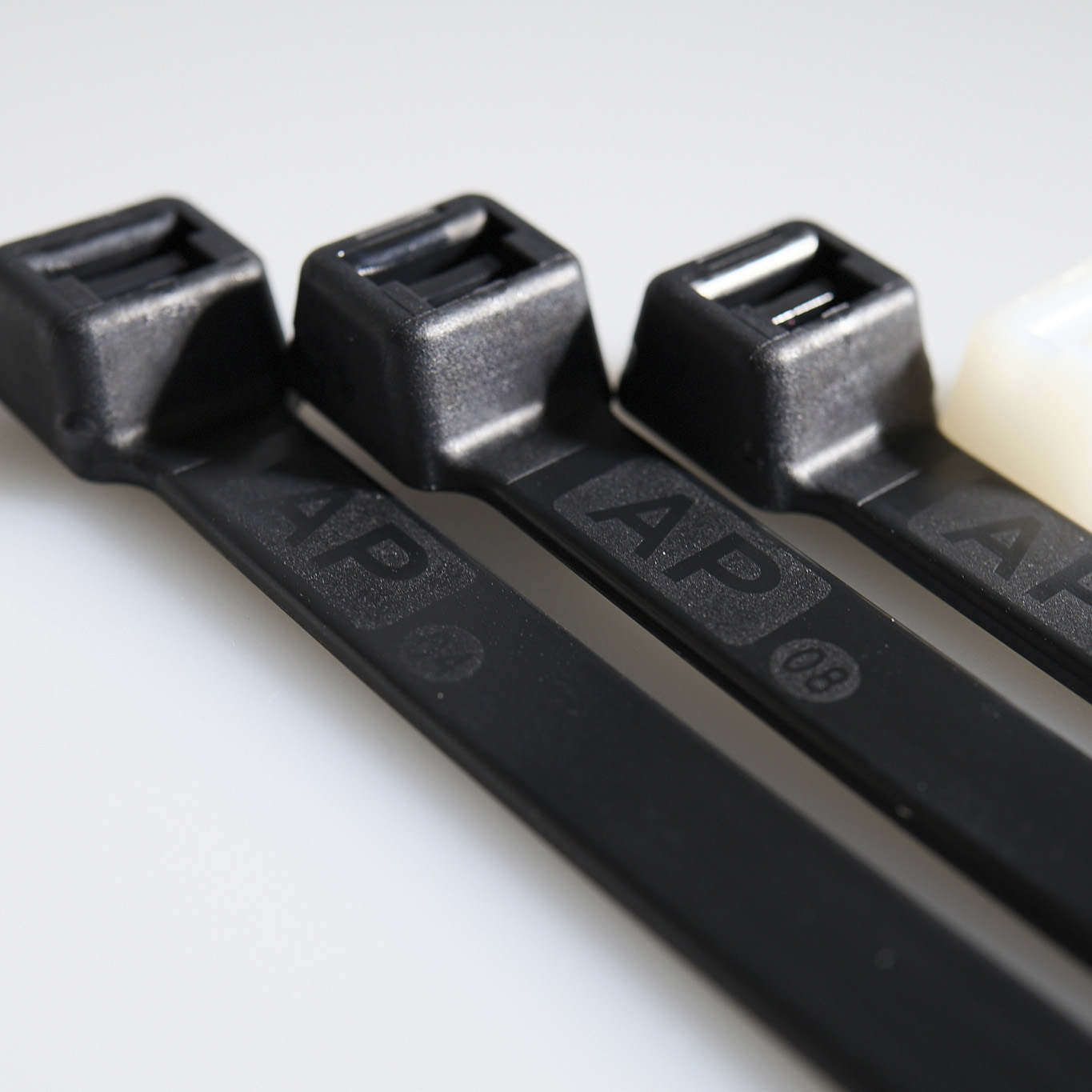
A new 300 mm cable tie with a 6 mm strap is in preparation for mass production. Its strap is 25% wider than the existing 4.8 mm AP300, offering a broader surface around the bundle.
Technical guides
Push-in or Lever Connectors: Which One Suits Which Job?
Push-in connectors suit simple wiring that is rarely reopened. Lever connectors suit equipment that is serviced or rewired often, and jobs that mix wire sizes. For lighting and building wiring in tight spaces, look at the mini push-in connector. Whichever you choose, check wire range, rating, temperature and strip length first.

Technical guides
How to Use Wire Connectors: Choosing the Size by Wire Gauge and Count
Choose a wire connector by the wire combinations in its specification table, not by colour. Count the gauge and number of wires to be joined, find that combination in the table, and check the voltage and temperature ratings and strip length. Insert the wires with their ends aligned, twist until firm, and tug each wire to confirm.