Once fastened, a cable tie on a solar installation has to withstand years of sunlight, rain and the difference between day and night temperatures. Wiring behind modules, cables running along the structure and the area around combiner boxes and inverters all face different conditions, so a single tie does not suit them all. Based on Allpum product specifications, here is how to choose the fastener for each location.
Why fasteners weaken on solar installations
- Ultraviolet light Long exposure to UV light weakens nylon from the surface, which can lead to discolouration and cracking. On installations with no shade the effect keeps adding up.
- Temperature swings Heating up at midday and cooling at night repeats every day, and the seasons bring winter cold as well. Choose a product whose operating temperature range covers the site.
- Rain, moisture and wind When wind moves the cables, the fastening point is loaded again and again. Coastal sites add salt on top of that.

Choosing a fastener for each location
| Location | Recommended | Specification |
|---|---|---|
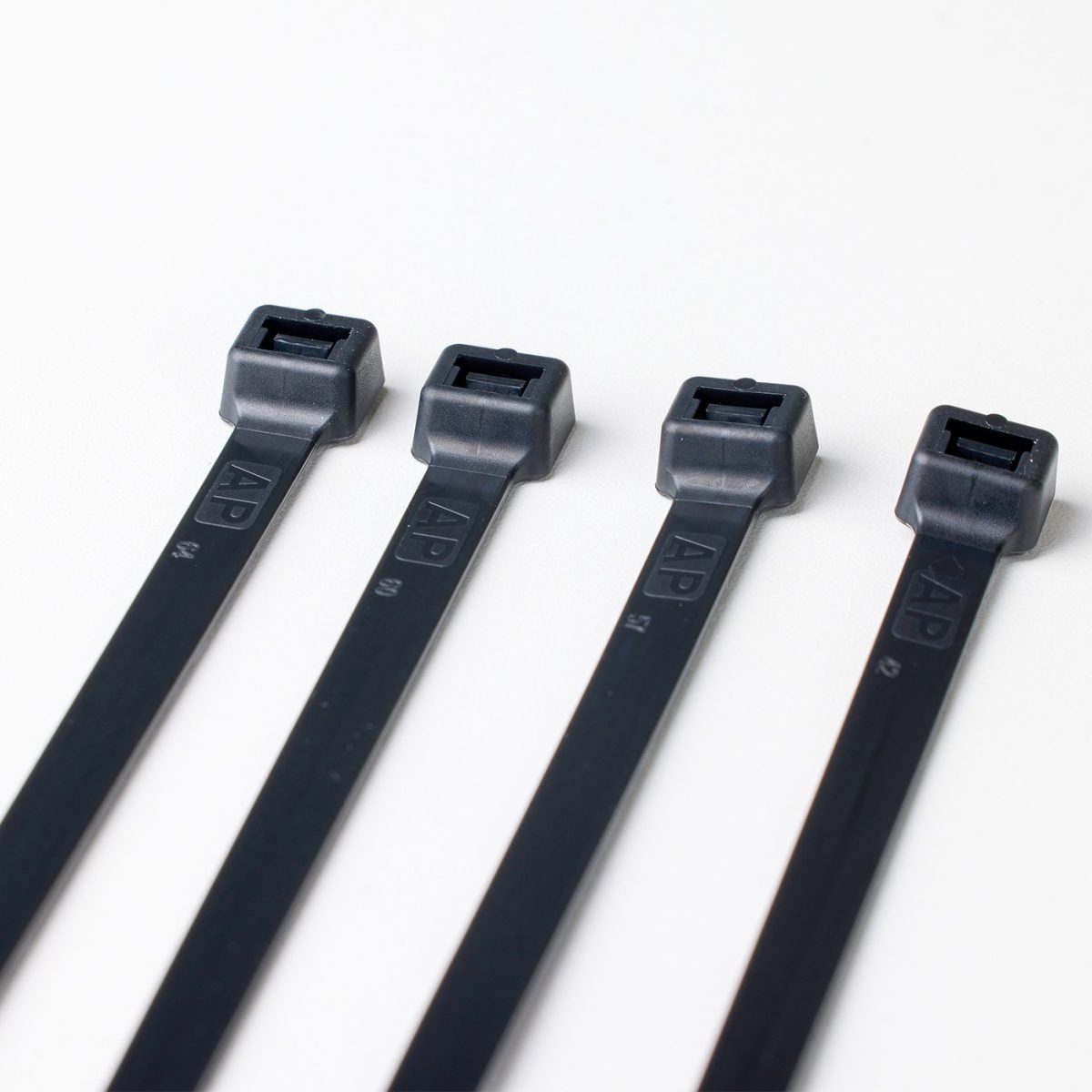
| Module wiring and structure cables in sunlight | Allpum cable tie, black (AP series) | Nylon 66 · -40 to 85 °C · UV-resistant black (not 100 mm) · passed UL Resistant to UV Light test |
| Around equipment that runs hotter | Heat-resistant cable tie APH | Nylon 66 (resin UL94 V-2) · up to 120 °C · applications include solar |
| Coastal or salty sites, hard-to-reach spots | Stainless steel cable tie APST | SUS 316 / 304 · -60 to 300 °C · 800 N (4.6 mm) / 1,000 N (7.9 mm) |
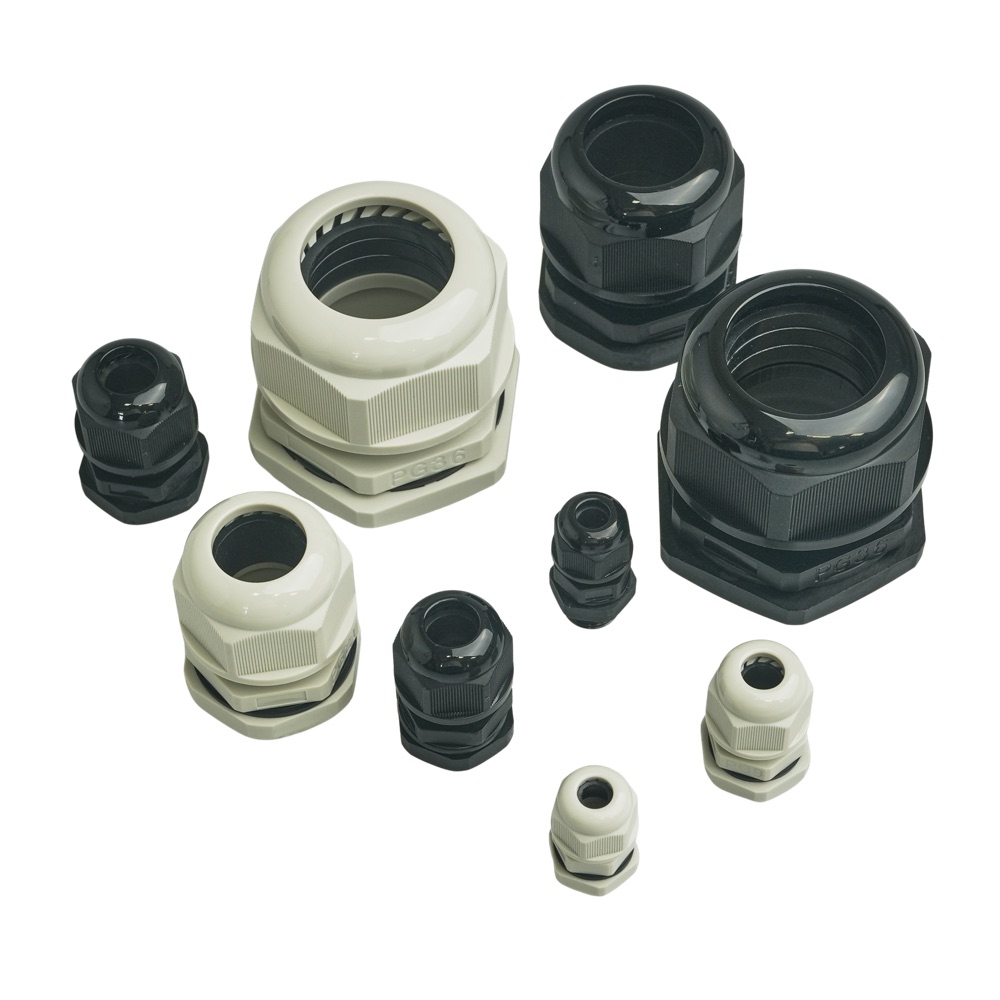
| Cable entry into combiner boxes and enclosures | Cable gland PG | An entry fitting that grips the cable and seals the enclosure opening |
Wiring in sunlight: UV-resistant black ties
All colours of Allpum cable ties can be used indoors and outdoors, but for spots in long sunlight we recommend the UV-resistant black ties. Korean-made black Allpum cable ties have passed the UL "Resistant to UV Light" test. The 100 mm size has no UV grade, so choose 140 mm or longer for outdoor wiring. The operating range is -40 to 85 °C, which covers most winter and summer outdoor air temperatures, but do not use them close to heat sources that may exceed 85 °C.
Hotter spots: heat-resistant APH
Where temperatures may exceed 85 °C — against metal surfaces heated by the sun, or around equipment that generates heat — consider the heat-resistant APH tie, rated up to 120 °C. APH's UL94 V-2 is the flame rating of the resin, not a certification of the finished tie. APH is made by our Thai subsidiary; 100–200 mm are standard sizes, while 270–300 mm are in development testing, so please inquire.
Coastal sites and long-term spots: stainless ties
For salty locations such as coastal or floating installations, and for high spots that are hard to climb back to for replacement, use SUS 316 / 304 stainless ties. Grade 316 generally contains molybdenum and resists salt better, so confirm the grade when ordering. A metal strap can bite into the cable jacket, so do not overtighten, and when fastening to aluminium or galvanised structures for the long term, consider an insulating layer between them to prevent galvanic corrosion.
Installation tips
- Size for the bundle Choose a length whose max. bundle diameter comfortably exceeds the bundle, and a width whose tensile strength suits the load. Exceeding the rated tensile strength may break the tie.
- Moderate tension Tighten only until the cables stop moving. Overtightening crushes the jacket and concentrates stress at the tie as cables expand and contract with temperature.
- Cut tails flush Cut the tail flush with the head so a sharp edge does not damage other cables or injure workers.
- Protect from edges Keep cables and ties off sharp structural edges, and add protective padding where wind makes them rub.
- Regular inspection During routine inspections look for discoloured, cracked or loose ties, and replace any faulty tie with a new one rather than undoing and reusing it.
UL certification applies to products made at our Korean headquarters; Thai-made Allpum cable ties do not carry a UL product-certification claim. Why to choose black ties is covered in our black UV cable tie review, and fastening tips for stainless ties in our stainless steel cable tie guide.