
- Global market trends
- Cable tie market analysis
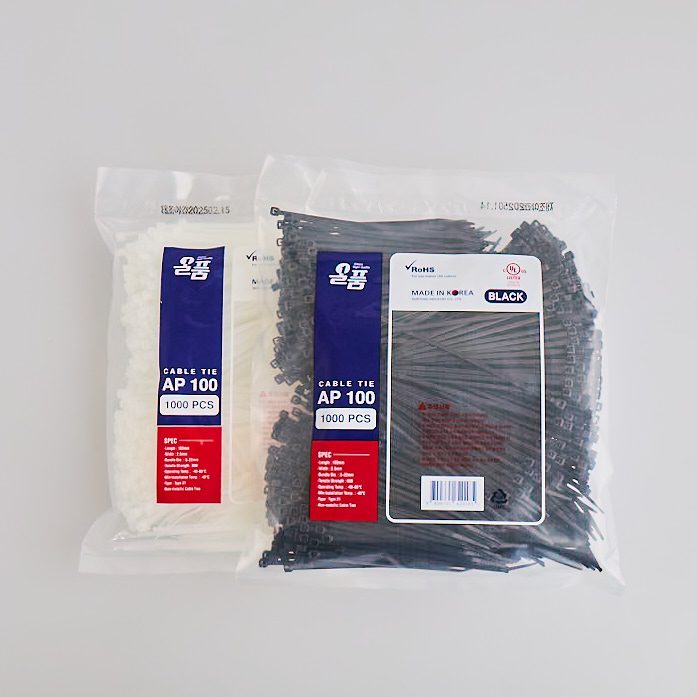
- Allpum cable ties
1. Global cable tie market size and growth outlook
The global cable tie market is currently valued at around USD 1.49 billion — a figure that shows the cable tie's standing as a high-performance component rather than a simple packaging item. According to market research firms, the compound annual growth rate (CAGR) from 2023 to 2030 is forecast at about 6.40%, meaning demand for cable ties keeps growing not only in traditional industries but also in new ones.
This growth goes hand in hand with the development of advanced industries such as electric vehicles, data centres, expanding telecom infrastructure and smart factories. Together with structural change across industry, it is driving demand for a wider range of higher-performance cable ties.
2. Cable tie market trend analysis
① Trends by material
Cable ties are produced from a variety of materials depending on the purpose and environment of use.
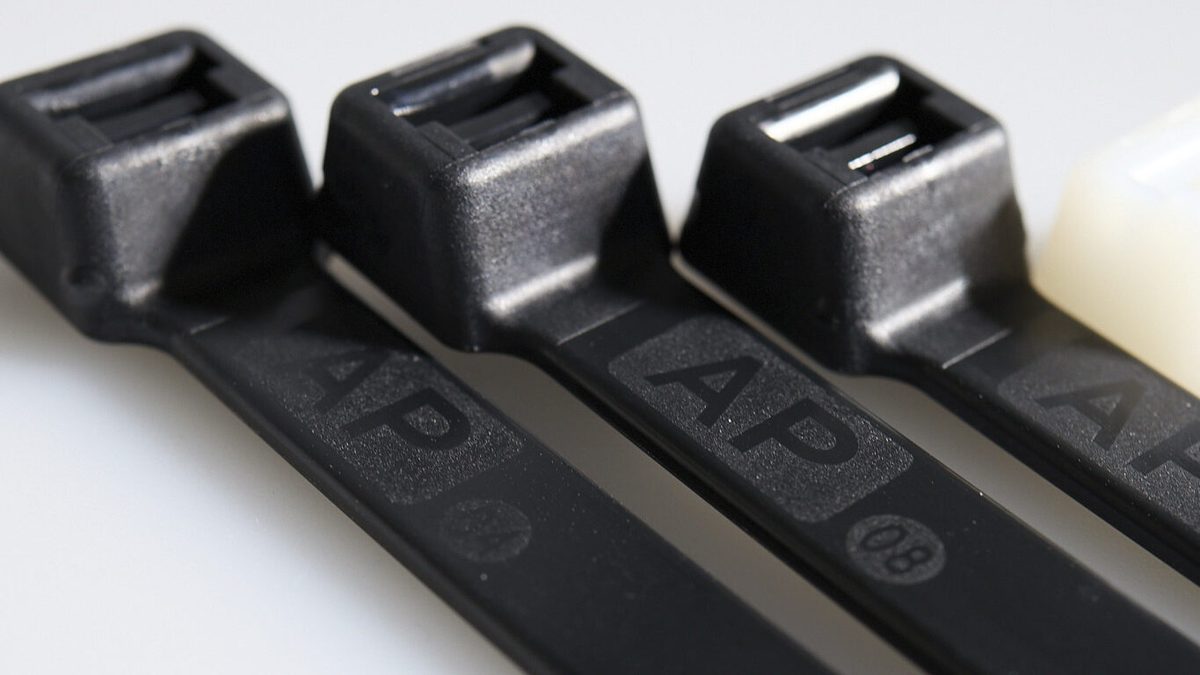
- Nylon cable ties excel in flexibility, processability and cost efficiency, and are the most widely used in electronics, telecommunications and household electrical applications.
- Stainless steel cable ties offer excellent heat and corrosion resistance and perform reliably in extreme environments and in high-temperature, high-humidity conditions. They are mainly used in automotive, shipbuilding and industrial plant applications.
② Demand trends by industry
- In the automotive industry, cable ties are essential for securing wire harnesses inside vehicles, and demand for high-heat, high-strength cable ties is growing as electric vehicles spread.
- The electronics and telecom industries need large-scale cable management for data centre construction and 5G infrastructure expansion, and are increasingly adopting cable ties with anti-static and flame-retardant properties.
③ Market share by region
- North America accounts for about 38% of the total market and is characterised by a high concentration of high-tech industries such as aerospace, automotive and telecommunications.
- Asia-Pacific, led by China, Korea, Japan and India with their strong manufacturing bases, is expected to be the fastest-growing region.
3. Major global manufacturers and recent technology trends
Global cable tie manufacturers are raising their competitiveness by strengthening their technology and diversifying their product lines to meet market needs.
Hellermanntyton
In 2024 it introduced biodegradable cable ties, actively responding to demand in the eco-friendly market. The product is drawing attention for its link to ESG management.
Panduit
It has launched heat-resistant cable ties that perform reliably in high-temperature environments and is supplying them to industrial plants and shipyards.
3M
By launching new products with a self-locking mechanism, it has improved worker efficiency and ease of installation.
Avery Dennison
Its colour-coded cable ties make sorting and identification easier, improving work efficiency on construction and production sites.
Sapiselco
It is targeting a niche market with stainless steel cable ties offering enhanced corrosion resistance for the marine industry.
4. Market segmentation analysis

① By material type
- Nylon cable ties The most common type, leading the overall market
- Stainless steel cable ties Specialised for high-strength and high-heat environments
② By application
- Cable management inside electronic and telecom equipment
- Construction and plant equipment installation
- Automotive electrical systems
- Internal maintenance of household appliances, etc.
Because applications are so varied, securing a cable tie line-up optimised for each environment will be key to future competitiveness.
5. Conclusions and implications
Cable ties are now recognised not as simple consumables but as key components that determine productivity and safety on industrial sites. Continuous technology development and production tailored to demand are the keys to staying competitive.
Cable tie manufacturers like us need to respond strategically as follows.
- Develop eco-friendly materials and adopt ESG management
- Develop high-performance products for extreme environments
- Strengthen price competitiveness with automated, high-volume production systems
- Expand export markets by obtaining global certifications
- Diversify global sales channels through online platforms and global marketplaces (e.g. Alibaba)
If we understand where the global market is heading and plan our response one step ahead, our position as a Korean cable tie manufacturer will become even stronger.